I was in deep conversation with a mentor-professor a few months ago, and she told me that the brand new campus library was unlike anything she had ever seen before--in fact, she likened it to the sci-fi films and books she remembered from childhood: robots and all.
Let me explain further. This new library boasts a spacious open-floor plan with clean tables and cushy armchairs, floor after floor of cleanliness and orderliness abounds. Interspersed between tables and chairs and empty carpeted space are a mere handful of computers. Based on floor plan and aesthetics, the new building reminds me of the communal space of a posh college dorm where everyone owns a new laptop and a pair (or two) of expensive dress shoes. Heck, there is even a Peet's Coffee on floor 1. However, there was one monumental thing missing from this picture: books.
Where the heck were the books?
The mentor-professor stated that this state-of-the-art library was built with an insanely large room, inaccessible to the public, that spans from the bottom floor to the building's ceiling--seven or eight stories high, in total--where all the books are housed. Organized, these books were, by size and color...not by the traditional subject, call number, title, or even author. To access them, students and faculty must access the online library database and enter in a subject or title. If the books are of interest, the next step is to request them. Since the book stacks are housed in one gigantic room, even a handy ladder cannot not reach the ones highest up from the ground level. So, instead of a ladder or human retrieving a book, the task is designated to a robot who grabs the book based on color and size--not title, call number, author, or subject. Robots, in a library, grabbing books from a room that spans seven stories high indeed qualifies as strange, to say the least.
The wise mentor-professor then said something that really made me stop and think about the long-term cost of technological advances. With this state-of-the-art library set-up, students and faculty are no longer able to physically go at random from aisle to aisle in search of interesting books. More importantly, gone are books arranged by call number, so the public cannot access titles with similar call numbers or subjects without first requesting a book pick-up.
Maybe I'm being too critical here, but I'm sticking to my belief that technology can be cool, sleek and modern--making life far more easier for you and I--but when it takes the place of critical thinking skills (i.e.: physically walking through aisles and searching for books), I see a glaring problem. Imagine if your neighborhood library took this approach of stashing all books in an inaccessible area, and patrons could only blindly search the online database for them--it sucks the fun out of book finding. It also increases our foolhardy reliance on technology to serve as a collective critical thinking cap that will, undoubtedly, affect later generations...and it is to that that I weep.
Showing posts with label moral dilemma. Show all posts
Showing posts with label moral dilemma. Show all posts
May 11, 2013

October 03, 2012
Half the Sky
Did anyone catch "Half the Sky: Turning Oppression into Opportunity for Women Worldwide" on PBS this week? It's a documentary based on the book of the same name by the husband-wife journalist team Nicholas D. Kristof and Sheryl WuDunn. They were the first couple to win the Pulitzer Prize, which was for their coverage of the 1989 Tiananmen Square protest movement. Kristof and WuDunn's film addresses different types of gender-specific oppression in Africa and Asia from the perspective of not only Western journalists, but of Hollywood actresses.
Yes, the word, "oppression" conjures up mainly negative connotations reminiscent of the Women's Liberation Movement; the overtly angry woman with a huge chip on her shoulders. But please do read on because the film encompasses so much more than that. "Half the Sky" portrays humanity in the least human of places: the slums of India--where children sleep under their prostitute mother's beds while their mother is working, the desolate landscape of Somaliland--where nurses are fighting to get mothers the prenatal and neonatal care they and their babies need, etc.
Rather than go into a synopsis of the entire film, I would like to share my observations about it:
1. The first half is mind-harrowing and sad, as it discusses and interviews very young girls forced into prostitution; 2. Parts of the film are very PSA and pro-public policy in structure; 3. By including an America actress (Gabrielle Union-above video, Diane Lane, Meg Ryan, America Ferrera, Olivia Wilde, and Eva Mendes) in each segment (countries covered include Vietnam, Somaliland, Cambodia, and India), the film puts a very multiracial, female American face on the issue of global female oppression; 4. Discusses the role that Western nations play in maintaining this oppression (i.e.: Cambodia sex tours of underage girls sold in the US); 5. Importantly emphasizes the cultural relativism present when Western nations denounce culture-specific practices, such as female genital mutilation/cutting; 6. Emphasis on how education is the key to empowerment, but I did not like the you-have-to-learn-English-to-succeed mentality expressed; 7. It is mainly women who implement district-wide programs to help impoverished women and girls; 8. "The Colonizing West is the Best" tone is still evident in the film, albeit in subtle way, for many of the program implementers were formerly employees of either the US or England, as well as educated in the West; 9. Allowing women to be in charge of their own money bolsters the local economy (thanks for the reminder, GoHeyJudy) and country--not to mention, women and girls are treated better.
All in all, "Half the Sky" was a well edited, critically engaging documentary. A sucker for documentaries, I was both critical and contemplative about the subject matter and portrayal of the women and girls in the film. This film especially left me thinking of how the Interdependence Movement is genuinely a very real movement, since the stories are not just personal narratives: they are a deep dark hole where the unknown is dug up one-by-one, piece-by-piece, starkly revealing not just the treatment of women in each country, but the collective treatment of women all over the world, which is, as the film puts it bluntly, the social issue of our generation. The video that opens this post is my favorite segment of the film, Gabrielle Union's trip to Vietnam.
September 07, 2012
Empty Chair Space

It just calms me down, soothes the wandering mind just a bit...
How have you been?
As for me, besides going a bit nutso, I am fine. My desk has readily been taken over by a swarm of necklace chains, potential stone designs, and jewelry tools (many autumn/winter designs), so I have been creating a temporary desk space from a stack of pillows; and then, when that isn't adequate enough, I roam from room-to-room in search of a more ergonomic workspace.
Perhaps I should lay off the chai some--maybe then I will anchor down and complete the items my to-do list. But I can't blame the chai for this one...
There is currently so much going on, with self-imposed deadlines and among other things, national matters of supreme importance. There is just so much sad finger pointing in this world, where nobody wants to take the blame, and everyone wants to reap the benefits--on either side. This is as political as I will go on this blog, for although I am not the most political, I find it important to be versed on topics that affect us all.
On that note, last night I caught a snippet of Tavis Smiley's conversation with political theorist Benjamin Barber, the president/founder of the Interdependence Movement. According to Wikipedia:
"In an interdependent relationship, participants may be emotionally,
economically, ecologically and/or morally reliant on and responsible to
each other [my emphasis]."
Barber's work highly resonates with me on a visceral level due to its let's-work-together-and-stop-this-butting-of-heads mentality, and I could not help but reflect on our eternally-feuding, national political parties and their lack of interdependence--their active choice to not work together on issues that again, affect us all. I'm not saying that an interdependent relationship will solve all of our social, moral, and economic ills (and I know that interdependence is far easier said than done) but goodness, if we only looked past political affiliation and truly listened to one another on a personal, local, and national levels, I genuinely feel that much can be accomplished. If we work together, a step forward will be taken (and nope, I am not quoting rhetoric here). On a larger scale, with the Internet, et. al., nations are truly porous, and we are socially and economically (and morally) connected.
I am not an eternal optimist, just a realist. Here is the link to Smiley's interview with Barber.
September 10, 2011
9/11/11
I was not the only one with a moral dilemma whether or not to post about the 10th anniversary of 9/11. GoHeyJudy sums it up best: "I struggled for days over whether or not to post these links. Especially this one. It's gut wrenching. I thought it may be too intrusive or perhaps exploitative." I feared the exploitative, too. GoHeyJudy has a very unique and interesting perspective on politics (most of it much different from my own); her writing is embued with so much heart. Not to mention, she has a killer writing style. It's eye-opening to look at other political perspectives, for we do not live in a proverbial bubble--free speech is of paramount importance to me.
Cultural amnesia, a culture of forgetting...I do not believe that this happens in the long run. Whenever a catastrophe occurs, forgetting is the initial, adaptive mechanism to the pain and utter shock of an event. We forget how horrifically we treat each other. History gives us a lesson. Take Hiroshima. The internment of Japanese Americans during WWII in the United States. Jews during WWII. (Did you know that the all Japanese American (mainly second generation) 442nd RCT actually liberated Dachau? The irony of the interned, who were held behind barbed wire and were only allowed out to fight for the country that interned them, liberating a concentration camp behind barbed wire--thanks to my husband for bringing my attention to this irony. Helping the war cause was the only way out of the internment camps.) The fear of anyone of Middle Eastern descent being a terrorist immediately after 9/11.
We are left with the physical and emotional aftermath of gut-renching fear and borderline hysteria. Then we slowly pick up the pieces, and life goes on. We oscillate between reliving the moment and then, trying to forget it. Sometimes we forget, even for a little while, and things seem to get better. Then anniversary reactions trigger our emotional, mental, and physical remembering of chaos and pain. The visceral, immobilizing kind; the kind shrouded by the dark cloak of fear. I don't believe that forgiving and forgetting go hand-in-hand.
Later generations, not affected by the events, instinctively know that something is off, something has happened--and they live with the silence and the pain. They know no other way to live.
Cultural amnesia, a culture of forgetting...I do not believe that this happens in the long run. Whenever a catastrophe occurs, forgetting is the initial, adaptive mechanism to the pain and utter shock of an event. We forget how horrifically we treat each other. History gives us a lesson. Take Hiroshima. The internment of Japanese Americans during WWII in the United States. Jews during WWII. (Did you know that the all Japanese American (mainly second generation) 442nd RCT actually liberated Dachau? The irony of the interned, who were held behind barbed wire and were only allowed out to fight for the country that interned them, liberating a concentration camp behind barbed wire--thanks to my husband for bringing my attention to this irony. Helping the war cause was the only way out of the internment camps.) The fear of anyone of Middle Eastern descent being a terrorist immediately after 9/11.
We are left with the physical and emotional aftermath of gut-renching fear and borderline hysteria. Then we slowly pick up the pieces, and life goes on. We oscillate between reliving the moment and then, trying to forget it. Sometimes we forget, even for a little while, and things seem to get better. Then anniversary reactions trigger our emotional, mental, and physical remembering of chaos and pain. The visceral, immobilizing kind; the kind shrouded by the dark cloak of fear. I don't believe that forgiving and forgetting go hand-in-hand.
Later generations, not affected by the events, instinctively know that something is off, something has happened--and they live with the silence and the pain. They know no other way to live.
***
My anxiety is heightened over each news blurb concerning our country on this anniversary. I cannot help but click on every online news article that I see that deals in some way with the anniversary of 9/11. I think that I am trying to find reassurance that everything is going to be okay. That we can go on without fear.
March 21, 2011
Spending Power...for Charity
I do not categorize myself as a big shopper, but I do enjoy my rings and pendants--which is why I have a jewelry shop (that sells mainly pendants) on Etsy. I design and create items that I would purchase, that I adore. My consumeristic tendencies reflect my items for sale...good or bad?
Am I contributing to the consumerism by women, when women's salaries are still not, for the most part, on par with men's? The moral dilemma on spending the money that I do not necessarily have is constantly bringing up these moralistic issues in me. It's a woman thing, I think.
However, I spent the majority of my afternoon and night looking for items to purchase on Etsy, where the proceeds would go to relief efforts in Japan--when I should have been writing (but it was a fun break!). :/ I just purchased a beautiful gray moonstone ring (see image below) from UmiDesign--she is originally from Sendai, Japan, and is donating 20% of each item in her shop.
I also like ShihoYamashita's jewelry. She is also originally from Japan--30% of all sales from her shop will go to disaster relief in Japan. I especially love this necklace:
Another very cool item from the husband and wife team, iswasandwillbe. I've been eyeing this pendant (see below) VERY intently--it is gloriously unisex in design. They've created only 30 of these uniquely subtle pendants, each with 100% of proceeds going to charity.
100% of proceeds from the collective shop, loveforjapan, will be donated to disaster relief in Japan. There you will find my donated my Unique Carnelian and Red Aventurine Pendant. :)
Please click on the shop banner below to enter the shop.

------ --- -- -- ---- -- - - -- --- --- --- --- ----- --- ---- ---- -- - - - -- - ----- -- - ----- ----- ---- -- - -- - - - - ---- - --
Moral of the/my (spending)story:
Spending money for charity is something that I truly enjoy and feel good about; it is spending power at its greatest. Yet, women are the most prolific consumers in our society, even when our wages are unequal with men's (the facts show this-- last week, my husband and I saw a blurb on the gender wage gap on the national evening news). I acknowledge that I am part of this group (even if I don't consider myself a prolific shopper). However, it is okay to treat yourself to something nice once in awhile. :)
Good causes are good to donate to, but donation directly to an organization is even better, for what you get in return is more than just an item purchased in exchange for a donation: you relinquish the moral dilemma around purchasing "unneeded," aka "decorative" items. You feel inherently good about getting nothing in return besides the giddiness that accompanies doing a good deed. Like opening the door for an elderly man or woman.
Donating anything is a good thing, and is a rarity in our increasingly fragmented society, where donations are needed so greatly--yet are oftentimes unfulfilled. Instead of the "me, me, me" mentality, we need to get to an "us, us, us" mentality, on a local and global scale. Technology is a double-edged sword, for it allows us to connect globally, sell our wares for good causes and income, and also is so costly to our pocketbooks (think cellphones, laptops, etc.) and nullifies much of our face-to-face interactions. Coldness, I say, but with a flickering glimmer of light.
Am I contributing to the consumerism by women, when women's salaries are still not, for the most part, on par with men's? The moral dilemma on spending the money that I do not necessarily have is constantly bringing up these moralistic issues in me. It's a woman thing, I think.
However, I spent the majority of my afternoon and night looking for items to purchase on Etsy, where the proceeds would go to relief efforts in Japan--when I should have been writing (but it was a fun break!). :/ I just purchased a beautiful gray moonstone ring (see image below) from UmiDesign--she is originally from Sendai, Japan, and is donating 20% of each item in her shop.
 |
JAPAN RELIEF: Moonstone Ring in Sterling |
I also like ShihoYamashita's jewelry. She is also originally from Japan--30% of all sales from her shop will go to disaster relief in Japan. I especially love this necklace:
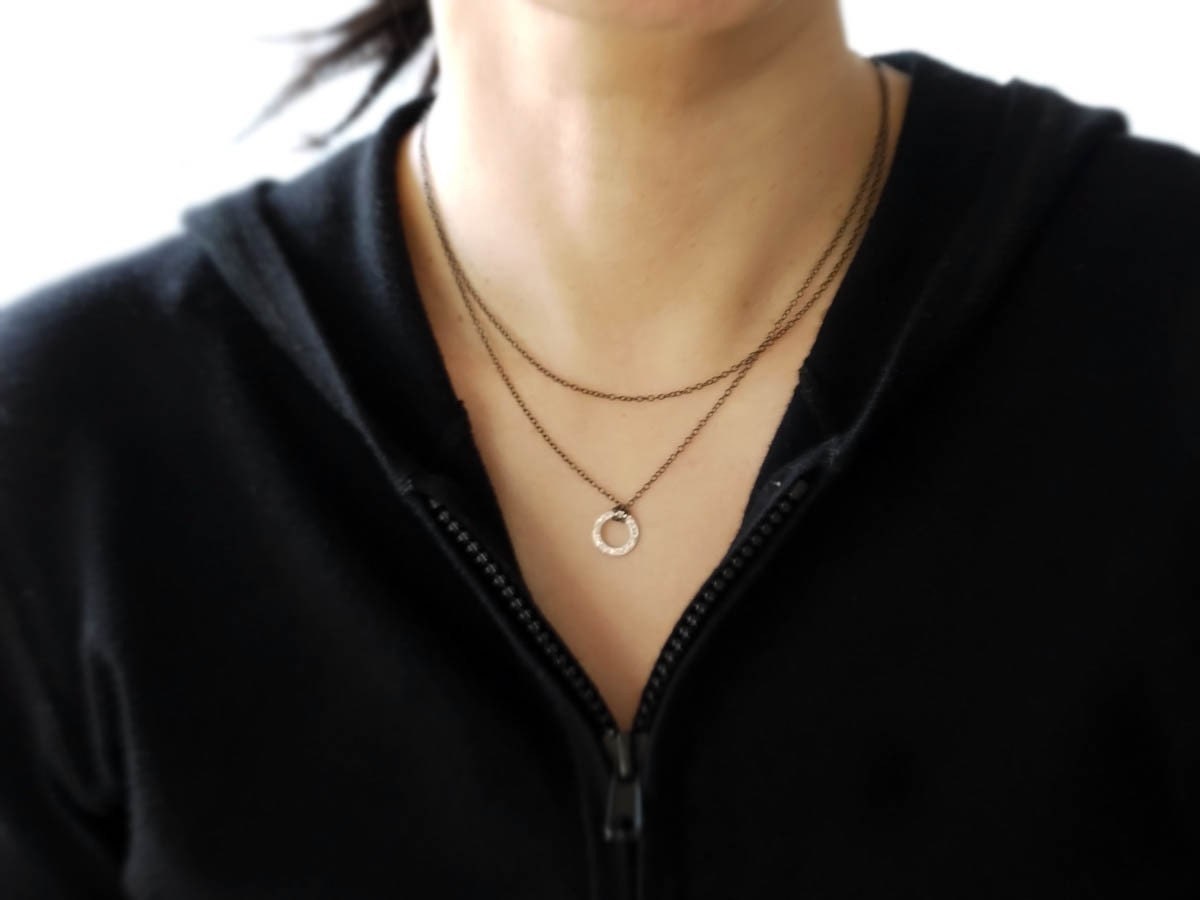 |
Earthquake Relief for Japan - Black and White Necklace |
Another very cool item from the husband and wife team, iswasandwillbe. I've been eyeing this pendant (see below) VERY intently--it is gloriously unisex in design. They've created only 30 of these uniquely subtle pendants, each with 100% of proceeds going to charity.
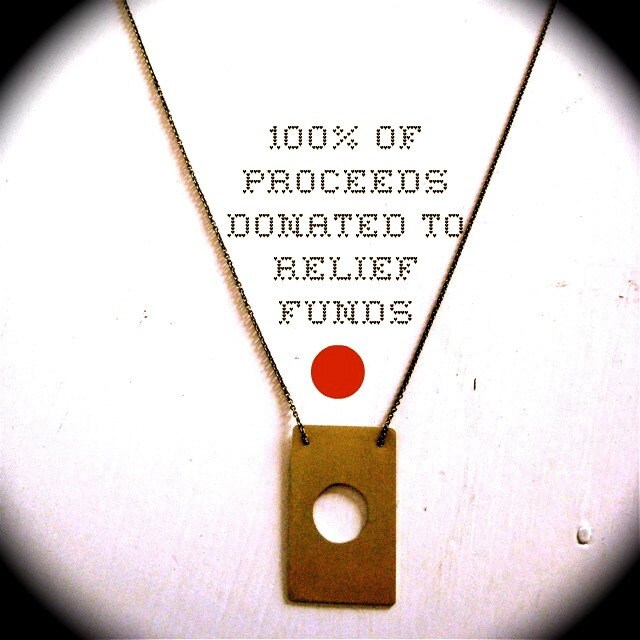 |
11 of 30 limited edition every bit necklace FOR JAPAN, 100 percent of proceeds donated |
100% of proceeds from the collective shop, loveforjapan, will be donated to disaster relief in Japan. There you will find my donated my Unique Carnelian and Red Aventurine Pendant. :)
Please click on the shop banner below to enter the shop.
------ --- -- -- ---- -- - - -- --- --- --- --- ----- --- ---- ---- -- - - - -- - ----- -- - ----- ----- ---- -- - -- - - - - ---- - --
Moral of the/my (spending)story:
Spending money for charity is something that I truly enjoy and feel good about; it is spending power at its greatest. Yet, women are the most prolific consumers in our society, even when our wages are unequal with men's (the facts show this-- last week, my husband and I saw a blurb on the gender wage gap on the national evening news). I acknowledge that I am part of this group (even if I don't consider myself a prolific shopper). However, it is okay to treat yourself to something nice once in awhile. :)
Good causes are good to donate to, but donation directly to an organization is even better, for what you get in return is more than just an item purchased in exchange for a donation: you relinquish the moral dilemma around purchasing "unneeded," aka "decorative" items. You feel inherently good about getting nothing in return besides the giddiness that accompanies doing a good deed. Like opening the door for an elderly man or woman.
Donating anything is a good thing, and is a rarity in our increasingly fragmented society, where donations are needed so greatly--yet are oftentimes unfulfilled. Instead of the "me, me, me" mentality, we need to get to an "us, us, us" mentality, on a local and global scale. Technology is a double-edged sword, for it allows us to connect globally, sell our wares for good causes and income, and also is so costly to our pocketbooks (think cellphones, laptops, etc.) and nullifies much of our face-to-face interactions. Coldness, I say, but with a flickering glimmer of light.
Subscribe to:
Comments (Atom)